Introduction
The Vedas are a vast and ancient body of religious texts that form the foundational scriptures of Hinduism, known also as Sanātana Dharma or the “Eternal Path.” The very word Veda translates from Sanskrit as “knowledge,” signifying that these texts are believed to contain the most fundamental truths concerning the origin, function, and purpose of existence.1 Considered among the oldest, if not the oldest, religious works in the world, the Vedas represent a complex, multi-layered literary and philosophical corpus whose evolution from ritualistic hymnody to profound metaphysical inquiry reflects one of the most significant developments in the history of human thought.
This report will provide an exhaustive analysis of the Hindu Vedas, addressing their scriptural authority, traditional compilation, textual structure, historical evolution, and philosophical legacy. It aims to synthesize the internal, faith-based perspective of Hindu tradition with the external, evidence-based analysis of modern Indological scholarship. The methodology draws upon a wide range of sources, including traditional Puranic literature, the Vedic texts themselves, and contemporary academic research in history, archaeology, and linguistics.
Unlike the scriptures of many other world religions, the Vedas are not thought to have been revealed to a specific person at a single historical moment. Instead, Hindu tradition holds that they have always existed, apprehended by ancient sages in deep meditative states.2 Understanding the Vedas, therefore, requires a dual approach that respects both their theological status as eternal, authorless revelation (
Śruti) and their historical development as a product of the Indo-Aryan culture of ancient India, composed and transmitted orally for millennia before being committed to writing.1 They are not merely historical artifacts but a living tradition whose chants, rituals, and philosophical insights continue to shape the spiritual landscape of India and the world.
Part I: The Divine Foundation: Understanding Vedic Authority
The supreme authority of the Vedas within Hinduism rests upon a sophisticated theological and epistemological framework built on two core concepts: Śruti and Apauruṣeya. These principles establish the Vedas not as a book written by men, but as a timeless, divine revelation that was merely perceived by enlightened sages.
Śruti – The Breath of the Eternal
The entire corpus of the Vedas is classified as Śruti, a Sanskrit term that literally means “that which is heard”.3 This designation is central to its authority, as it posits that the Vedas originated directly from God, or the ultimate reality, and were “heard” or perceived by the great
Rishis (seers) of ancient times during profound states of meditation and penance (tapasya).3 The Rishis, therefore, are not considered authors in the conventional sense but are revered as
mantra drashta, meaning “seers of the mantra”.3 They were the perfected instruments through which eternal, pre-existing cosmic truths were revealed to humanity. This is often compared to a scientist discovering a fundamental law of physics; the scientist reveals the law but does not create it.3
This concept of Śruti sharply distinguishes the Vedas from all other Hindu scriptures, which are classified as Smṛti, or “that which is remembered”.4
Smṛti texts, which include the great epics (the Mahābhārata and Rāmāyaṇa), the Purāṇas, and the law codes (Dharmaśāstras), are acknowledged as the compositions of human authors, albeit enlightened ones. While they are held in high esteem, their authority is derivative of the Vedas. In any instance of doctrinal conflict between a Śruti text and a Smṛti text, the word of the Śruti is considered final and absolute.5
The term Śruti is also inextricably linked to the primary mode of Vedic preservation: oral transmission. For millennia, the Vedas were passed down from teacher (guru) to student (śiṣya) through meticulous chanting and listening, a practice that continued long after the advent of writing.2 This was not a limitation of a pre-literate society but a deliberate choice rooted in the belief that the sonic form of the mantras was as important as their semantic meaning. The precise pronunciation, meter, and pitch accent were believed to be powerful vibrations capable of invoking deities and sustaining cosmic order.3 This necessity for perfect phonological fidelity spurred the development of some of the world’s earliest linguistic sciences, known as the
Vedāṅgas (“limbs of the Veda”), particularly Śikṣā (phonetics) and Chandas (meter).9 The oral tradition was thus a sophisticated technology for preserving not just words, but the perceived power of the divine sound itself.
Apauruṣeya – The Authorless Revelation
Complementing the concept of Śruti is Apauruṣeya, which means “not of a man” or “impersonal, authorless”.3 This doctrine asserts that the Vedas have no human author and are, therefore, free from the limitations, errors, and historical conditioning inherent in any human work.7 This concept is a cornerstone of the Mimamsa and Vedanta schools of Hindu philosophy, which have provided rigorous arguments for its validity.4
The implication of the Vedas being Apauruṣeya is that they are considered eternal (nitya), timeless, and infallible.5 Their truths are held to be
svatah pramana, or “self-evident,” meaning they do not require any external source for their validation.5 This elevates the Vedic knowledge to an absolute and universal status, transcending any single prophet, historical event, or cultural context. The authority lies in the revelation itself, not in any messenger.
The Mimamsa school offers a particularly robust philosophical defense of this concept. It argues that the relationship between a word (shabda) and its meaning is inherent and eternal. Since the Vedas are composed of words, and the fundamental phonemes that constitute these words are eternal, the Vedas themselves must be eternal and authorless.11 This sophisticated epistemological framework effectively insulates the Vedas from critiques of historical relativism from within the tradition. By defining the texts as
Apauruṣeya (authorless) and the transmission method as Śruti (divine hearing by perfected seers), the tradition establishes its foundational scripture as a transcendental and absolute source of knowledge (pramāṇa), resolving the problem of human fallibility in revelation.
Part II: The Architect of Knowledge: The Traditional Compilation by Vedavyasa
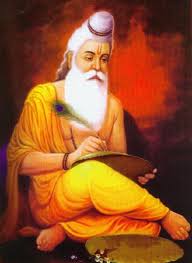
While the Vedas are considered eternal and authorless, Hindu tradition provides a compelling narrative for how this vast, singular body of knowledge was organized into the four distinct texts known today. This monumental task is attributed to the sage Krishna Dvaipayana, who earned the title Vedavyasa for his work. This story serves as a foundational myth that explains and legitimizes the process of canonization, transforming a gradual historical development into a single, divinely ordained event.
The Advent of Krishna Dvaipayana
According to Puranic accounts, the sage who would become this era’s Vyasa was born under miraculous circumstances. He was the son of the great sage Parashara and Satyavati, a fisher-maiden, who conceived him on an island (dvīpa) in the Yamuna river.12 He was thus named Krishna Dvaipayana—”Krishna” for his dark complexion and “Dvaipayana” for his island birth.12 From the moment of his birth, he was said to possess immense wisdom and spiritual maturity, immediately dedicating his life to asceticism and the pursuit of knowledge.12 Tradition holds that Vyasa is a
Chiranjivi (an immortal being who lives through the ages) and a partial incarnation (Amsa Avatar) of the god Vishnu, born with the specific divine mandate to preserve sacred knowledge and uphold Dharma (cosmic order).12
A Fourfold Division for a Declining Age
Hindu cosmology views time as cyclical, divided into four ages or Yugas: Satya, Treta, Dvapara, and Kali. These ages are characterized by a progressive decline in humanity’s spiritual, intellectual, and physical capacities.12 The Puranas state that originally, in the earlier, more spiritually advanced ages, the Veda was a single, vast, and undifferentiated body of knowledge.3
At the cusp of the present age, the Kali Yuga, Krishna Dvaipayana foresaw that the “limited perseverance, energy, and application of mortals” would make it impossible for them to grasp and retain the entirety of the Veda.14 The human lifespan would shorten, and memory and spiritual insight would diminish.14 Out of profound compassion for humanity, he undertook the monumental task of arranging, or “splitting” (
vy-as), this singular Veda into four distinct, manageable parts to ensure its preservation and accessibility.12 This act of compilation and organization earned him the honorific title “Veda Vyasa,” which means “the one who classified the Vedas”.15
This narrative personifies what was likely an organic process of intellectual organization and specialization over centuries. The “splitting” of the Veda is a powerful metaphor for creating a structured, transmissible curriculum from an amorphous whole. By attributing this feat to a single, divine figure acting out of benevolence, the tradition imbues the canonical structure of the four Vedas with sacred purpose and authority. The title “Vyasa” itself is understood to be a position held by a different great sage in each Dvapara Yuga who performs this vital task. Krishna Dvaipayana is revered as the 28th Vyasa of the current cosmic cycle.12
The Four Disciples and their Sacred Trust
After classifying the Veda, Vyasa established a pedagogical system for its transmission, ensuring the knowledge would flow down through dedicated lineages. He entrusted each of the four newly organized Vedas to one of his four principal disciples, who were tasked with mastering their respective texts and propagating them through their own schools (śākhās).16 This act established the paradigm of the
guru-śiṣya (teacher-student) tradition, which became the central model for the transmission of all sacred and even secular knowledge in India.16 The assignments were as follows 17:
- The Rigveda was entrusted to the sage Paila.
- The Yajurveda was entrusted to the sage Vaishampayana.
- The Samaveda was entrusted to the sage Jaimini.
- The Atharvaveda was entrusted to the sage Sumantu. (Some accounts, like 19, mention Aruni, indicating minor variations in the tradition).
In addition to this fourfold division, Vyasa is also credited with composing the eighteen Purāṇas and the epic Mahābhārata (which contains the celebrated Bhagavad Gita).12 These works are often referred to collectively as the “fifth Veda” because they were created to convey the profound and often esoteric teachings of the
Śruti to a wider audience, including women and the lower social classes, through accessible narratives, myths, and histories.14 The figure of Vyasa, therefore, is not just a compiler but the archetypal
guru, the master who not only embodies knowledge but also creates the systems for its effective transmission. His birthday is celebrated as Guru Purnima, a day for honoring all spiritual teachers, underscoring his status as the “original guru” of Hinduism.12
Part III: The Anatomy of the Veda: A Four-Layered Corpus
Each of the four Vedas is not a monolithic text but a composite body of literature containing distinct layers, or types of composition. This internal structure reveals a sophisticated pedagogical and philosophical progression, designed to guide an individual from external ritualism to profound internal realization. This progression is often framed within two broad divisions: the Karma-Kāṇḍa (the portion dealing with action) and the Jñāna-Kāṇḍa (the portion dealing with knowledge).
The Two Paths: Karma-Kāṇḍa and Jñāna-Kāṇḍa
The entire Vedic corpus is thematically divided into two main sections that represent two distinct but complementary paths of spiritual life.3
- The Path of Action (Karma-Kāṇḍa): This section comprises the bulk of the early Vedic texts and focuses on ritual action (karma), particularly the performance of elaborate sacrifices (yajña).3 The purpose of these rituals was to propitiate the various Vedic deities (such as Indra, Agni, and Varuna) in order to obtain worldly blessings like wealth, cattle, good harvests, progeny, and a favorable place in the heavenly realms after death.3 This path is primarily associated with the first two layers of the Vedic texts: the Samhitas and the Brahmanas.9
- The Path of Knowledge (Jñāna-Kāṇḍa): This section represents the later philosophical development within the Vedas. It shifts the focus from external action to internal inquiry, meditation, and the pursuit of ultimate wisdom (jñāna).3 The goal of this path is not worldly gain but mokṣa—liberation from saṃsāra, the cycle of birth, death, and rebirth.22 This path is embodied in the final two layers of the Vedic texts: the Aranyakas and the Upanishads.9
The Four Layers of Revelation
Each of the four Vedas contains a chronological and philosophical progression through four distinct types of texts. This structure functions as a comprehensive spiritual curriculum, guiding an individual through different stages of life and understanding.7
- The Saṃhitās: These form the oldest and most fundamental layer of the Vedas.7 A Saṃhitā is a “collection” of hymns, prayers, and sacred formulas (mantras), typically in metrical verse.6 These are the texts chanted during rituals to invoke and praise the deities. In the narrowest sense, the term “Veda” can refer specifically to the Samhitas.9
- The Brāhmaṇas: Following the Samhitas are the Brahmanas, which are voluminous prose texts composed by the Brahmin priests.7 They serve as detailed commentaries and manuals for the hymns and rituals described in the Samhitas.4 They explain the proper procedures for performing sacrifices, the symbolic meaning of ritual actions, and the mythological stories behind them, effectively acting as a “how-to” guide for the Karma-Kāṇḍa.7
- The Āraṇyakas: Known as the “Forest Texts,” the Aranyakas were composed for and by sages and hermits who had retired to the forest to lead a life of contemplation.3 These texts mark a crucial transition from the ritualism of the Brahmanas to the philosophy of the Upanishads. They begin to explore the mystical and symbolic interpretations of the rituals, shifting the focus from the external performance of the sacrifice to its internal, meditative significance.3
- The Upaniṣads: The final layer of the Vedic corpus is the Upanishads, whose name literally means “sitting down near” a teacher to receive secret instruction.22 They are also called Vedānta, meaning the “end” or “culmination” of the Veda, both chronologically and philosophically.3 These texts take the form of profound philosophical dialogues between teachers and students, moving away from ritualism entirely to explore the ultimate nature of reality. They are the primary source for the core metaphysical concepts of Hinduism, such as Brahman (the Absolute Reality), Ātman (the individual Self), and the identity between the two.20
This four-layered structure is not merely a classification; it represents a deliberate spiritual trajectory. It begins with the Samhita (the prayer), moves to the Brahmana (the ritual action), transitions with the Aranyaka (the symbolic meaning behind the action), and culminates in the Upanishad (the ultimate truth that the action points toward, rendering the external action itself secondary). This progression from karma to jñāna maps onto the four traditional stages of life (āśramas): the student (Brahmacharya) learns the Samhitas, the householder (Grihastha) performs the rituals of the Brahmanas, the forest-dweller (Vanaprastha) contemplates the Aranyakas, and the renunciate (Sannyasi) seeks liberation through the wisdom of the Upanishads.20 The Vedas thus provide a complete, lifelong curriculum for spiritual evolution.
| Vedic Layer | Nature of Content | Primary Purpose | Associated Section | Associated Life Stage (Āśrama) |
| Saṃhitā | Collections of hymns, prayers, and mantras in metrical verse. | Invocation and praise of deities. | Karma-Kāṇḍa | Brahmacharya (Student) |
| Brāhmaṇa | Prose commentaries on rituals, sacrifices, and their symbolism. | Correct execution of ritual action (yajña). | Karma-Kāṇḍa | Gṛhastha (Householder) |
| Āraṇyaka | “Forest Texts” providing mystical and symbolic interpretations of rituals. | Contemplation and transition from external to internal worship. | Upāsanā-Kāṇḍa / Jñāna-Kāṇḍa | Vānaprastha (Forest-dweller) |
| Upaniṣad | Philosophical dialogues on the ultimate nature of reality (Brahman, Ātman). | Attainment of spiritual wisdom and liberation (mokṣa). | Jñāna-Kāṇḍa | Sannyāsa (Renunciate) |
Part IV: The Four Streams of Knowledge: A Detailed Examination of the Vedas
Following the great classification by Vedavyasa, the singular Veda was channeled into four distinct textual streams, each with its own specific function, content, and character. These are the Rigveda, the Yajurveda, the Samaveda, and the Atharvaveda. Together, they form the complete canon of Hindu Śruti.
The Rigveda – The Veda of Praise
The Rigveda is the oldest and most foundational of the four Vedas, widely considered by scholars to be one of the most ancient religious texts in continuous use and the earliest surviving work in any Indo-European language.6 Its name translates to “Knowledge of Praise,” reflecting its content as a collection of hymns (
sūktas) dedicated to various deities. The Rigveda Samhita consists of 1,028 hymns, containing a total of about 10,600 verses (ṛcas), which are meticulously organized into ten books known as maṇḍalas (“circles”).9
The structure of the Mandalas reveals a chronological development. The core of the text, Mandalas 2 through 7, are known as the “family books” because each is attributed to a specific lineage of Rishis (e.g., Gritsamada, Vishvamitra, Vamadeva) and represents the oldest layer of composition.23 Mandalas 1, 8, 9, and 10 were composed later. Mandala 9 is unique in that it is entirely dedicated to hymns for Soma, a sacred plant and ritual drink that was central to Vedic worship.25 Mandalas 1 and 10 are the longest and most recent, containing hymns of a more speculative and philosophical nature.27
The hymns are primarily invocations to a pantheon of deities who largely personify the forces of nature. The most prominent among them are Indra, the king of the gods and deity of thunder and war; Agni, the god of fire who serves as the divine messenger carrying sacrifices from humans to the gods; Soma, the deified sacred drink that grants inspiration and immortality; and Varuṇa, the guardian of cosmic order (ṛta).25 While focused on praise and ritual, the Rigveda also contains the seeds of profound philosophical inquiry. Hymns like the
Nāsadīya Sūkta (Mandala 10) speculate on the origins of the universe with astonishing skepticism, questioning whether even the gods know how creation began.25 Another key hymn, the
Puruṣa Sūkta (Mandala 10), describes the creation of the cosmos and human society from the sacrifice of a primeval cosmic being, providing the mythological basis for the fourfold varṇa social structure.9
The Yajurveda – The Veda of Sacrifice
If the Rigveda provides the “what” to praise, the Yajurveda provides the “how” to sacrifice. Its name is derived from yajus, meaning “sacrificial formula,” and it serves as the essential liturgical handbook for the Adhvaryu priest, who is responsible for the physical execution of the yajña.29 While the Rigveda contains the prayers, the Yajurveda contains the prose mantras, invocations, and detailed instructions for building the fire altar, preparing the offerings, and performing the complex sequence of ritual actions.29 Its content is a practical guide for elaborate ceremonies such as the
Agnihotra (daily fire offering), Somayajna (Soma sacrifice), and the royal Ashvamedha (horse sacrifice).29
The most significant feature of the Yajurveda is its division into two major recensions, or schools: the Krishna (Black) Yajurveda and the Shukla (White) Yajurveda.21
- Krishna (Black) Yajurveda: This is the older and more “un-arranged” or “motley” collection.33 In its texts, the sacrificial formulas of the Samhita are interwoven and mixed with the explanatory prose of the Brahmana portion, making it a composite and sometimes complex text to follow.29 The prominent surviving schools of the Krishna Yajurveda are the Taittiriya, Maitrayani, and Kathaka Samhitas.30
- Shukla (White) Yajurveda: This recension is considered a later and more systematic arrangement, attributed to the great sage Yajnavalkya.20 The term “white” or “bright” refers to its clarity; it neatly separates the Samhita (the Vajasaneyi Samhita), which contains only the mantras, from its corresponding Brahmana (the famous Shatapatha Brahmana), which provides the commentary.29
The Samaveda – The Veda of Melody
The Samaveda, or “Knowledge of Melodies,” is the Veda of sacred song. It is the songbook for the Udgātṛ priest, whose role is to chant the hymns at specific points during the elaborate Soma sacrifices.34 The Samaveda is intrinsically linked to the Rigveda; it has been aptly described as “the Rigveda set to music”.34 Of its 1,875 verses, all but 75 are drawn directly from the Rigveda, primarily from the eighth and ninth Mandalas which are rich in Soma hymns.34
The true uniqueness of the Samaveda lies not in its words but in its music. The text is arranged not for recitation but for melodic chanting (sāman). It contains what are believed to be the world’s oldest surviving musical notations, which guide the priest in the correct intonation and melody.34 The text uses creative phonetic structures called
stobha (interpolated syllables and sounds) to stretch and fit the Rigvedic verses into the prescribed melodic patterns.34 Its musical system is based on a scale of seven notes (
saptasvara), which laid the foundation for the entire tradition of Indian classical music.37 Embedded within the Samaveda tradition are two of the most philosophically significant Upanishads: the expansive
Chandogya Upanishad and the concise Kena Upanishad.34
The Atharvaveda – The Veda of Charms and Spells
The Atharvaveda stands apart from the other three “hieratic” Vedas. While the Rig, Yajur, and Sama Vedas are primarily concerned with the great, formal, public sacrifices (śrauta rituals), the Atharvaveda represents a more “popular religion,” addressing the practical, personal, and everyday concerns of ancient Indian life.39 It is a collection of 730 hymns containing a vast array of spells, charms, and incantations.39
Its content is remarkably diverse, covering spells for healing diseases, protection from demons and enemies, prayers for long life and prosperity, charms to win a lover, and even curses to harm a rival.39 The Atharvaveda is a vital source for understanding the folk traditions, popular beliefs, and social customs of the Vedic period.40 Its extensive sections on healing and medicinal herbs are considered the foundational source for
Ayurveda, the traditional Indian system of medicine.39
Historically, the Atharvaveda was the last to be accepted into the Vedic canon. Early texts often refer to only three Vedas (trayī vidyā).39 Its eventual inclusion represents a significant synthesis of the formal, priestly religion with the more magical and shamanic traditions of the common people. Despite its focus on practical magic, the Atharvaveda is not without philosophical depth. It contains hymns that speculate on the nature of the cosmos and humanity, and it is the source of three important philosophical texts: the
Mundaka, Mandukya, and Prashna Upanishads.39
| Veda | Sanskrit Meaning | Associated Priest | Core Content | Key Features & Legacy |
| Rigveda | Praise-Knowledge | Hotṛ (The Invoker) | 1,028 hymns of praise to deities. | The oldest, most foundational text; source for other Vedas; contains key philosophical hymns. |
| Yajurveda | Sacrifice-Knowledge | Adhvaryu (The Performer) | Prose formulas and instructions for performing sacrifices. | Liturgical handbook; divided into Krishna (Black) and Shukla (White) recensions. |
| Samaveda | Melody-Knowledge | Udgātṛ (The Singer) | Rigvedic hymns set to musical melodies (sāman). | The Veda of sacred song; contains the world’s oldest musical notations; origin of Indian music. |
| Atharvaveda | Knowledge of the Atharvans | Brahman (The Overseer) | Spells, charms, and incantations for daily life. | Veda of “popular religion”; focuses on healing, protection, and magic; foundational text for Ayurveda. |
Part V: The Scholarly Lens: Historical, Archaeological, and Linguistic Perspectives
While the traditional account presents the Vedas as a timeless, divine revelation organized by a single sage, modern academic scholarship, employing methods from linguistics, archaeology, and history, offers a different perspective. This view sees the Vedas as a complex corpus of literature composed and compiled by many authors over several centuries, reflecting the evolution of the Indo-Aryan culture in ancient India.
Dating the Vedas – A Chronological Framework
There is no absolute dating for any Vedic text, but a broad chronological framework has been established through philological and linguistic analysis, particularly by comparing the language of the different Vedic layers. The scholarly consensus suggests a long period of composition spanning roughly a millennium.2
- The Early Vedic Period (c. 1500–1200 BCE): This period is defined by the composition of the oldest parts of the Rigveda, specifically the “family books” (Mandalas 2-7). The language of these hymns, known as Vedic Sanskrit, is the most archaic.7
- The Middle Vedic Period (c. 1200–900 BCE): This era saw the composition of the later books of the Rigveda (Mandalas 1, 8, 9, 10) and the Samhitas of the Yajurveda, Samaveda, and Atharvaveda.7 During this time, the center of Indo-Aryan culture shifted eastward from the Punjab to the Kuru-Panchala region in the upper Gangetic plain.44
- The Late Vedic Period (c. 900–500 BCE): This period is characterized by the composition of the Brahmanas, Aranyakas, and the oldest of the Upanishads.7 It witnessed the rise of large kingdoms (mahajanapadas) and the increasing complexity of ritual and social structures.44
It is important to note that these dates are for the composition of the texts. The oral tradition that preserved them is much older, and they were not committed to writing until many centuries later, perhaps as late as the 4th century AD.2 While this timeline is widely accepted in academia, some Indian scholars, such as Bal Gangadhar Tilak, have proposed much earlier dates (as far back as 6000 BCE) based on astronomical data within the texts, though this remains a minority view.2
| Period | Approximate Dates (BCE) | Key Texts Composed | Associated Archaeological Culture | Key Social Developments |
| Early Vedic | c. 1500–1200 | Rigveda (Family Books 2-7) | Gandhara Grave Culture, Black and Red Ware | Semi-nomadic, pastoral society centered in the Punjab. |
| Middle Vedic | c. 1200–900 | Later Rigveda books, Yajur, Sama, Atharva Samhitas | Painted Grey Ware (PGW) | Transition to settled agriculture; rise of the Kuru Kingdom. |
| Late Vedic | c. 900–500 | Brahmanas, Aranyakas, early Upanishads | Painted Grey Ware (PGW), Northern Black Polished Ware | Emergence of towns, kingdoms (mahajanapadas), complex social hierarchy. |
The Question of Origins – Migration vs. Indigenous Theories
One of the most debated topics in Indology is the origin of the Vedic people and their culture.
- The Indo-Aryan Migration Theory: This is the mainstream academic model, supported primarily by historical linguistics.2 It posits that the speakers of Old Indo-Aryan, the language of the Vedas, were part of a larger group of Indo-European peoples who migrated from a homeland in the Pontic-Caspian steppes (modern-day Russia/Ukraine). A branch of these people, the Indo-Iranians, moved into Central Asia (the Bactria-Margiana Archaeological Complex) around 2000 BCE. From there, the Indo-Aryans split off and migrated into the northern Indian subcontinent around 1900-1500 BCE, after the decline of the urban Indus Valley Civilization.44 The strong linguistic similarities between Vedic Sanskrit, Avestan (the language of ancient Iran), and other European languages like Greek and Latin form the primary evidence for this theory.47
- The Indigenous Aryan or “Out of India” Theory: This alternative model, which is popular in India, argues for an unbroken line of cultural development within the subcontinent.44 Proponents of this view suggest that the Harappan (Indus Valley) Civilization was itself Vedic or proto-Vedic, and that the Indo-European languages originated in India and spread outward. Evidence cited for this view includes archaeological findings at Harappan sites that seem to correspond with Vedic culture, such as the presence of “fire altars” resembling Vedic yajña kuṇḍas, depictions of figures in yogic postures, Shiva-like seals, and the geographical descriptions in the Rigveda matching the territory of the Harappan civilization, especially along the now-dry Sarasvati River.49 The debate remains active, with linguistic evidence strongly favoring migration and some archaeological evidence suggesting cultural continuity.
Unearthing the Vedic World
Archaeology provides a material context for the society described in the Vedas. Several archaeological cultures have been identified with different phases of the Vedic period.44
- Painted Grey Ware (PGW) Culture (c. 1200–600 BCE): This is the culture most strongly associated with the later Vedic period.44 PGW sites are found throughout the Gangetic plain in the same region described as the heartland of the Kuru-Panchala kingdom in Vedic texts. The pottery is a distinctive, fine grey ware painted with black geometric designs.44 The emergence of iron technology in Northern India is also linked to this culture, corresponding to the adoption of iron tools mentioned in later Vedic texts, which facilitated the clearing of dense forests for agriculture.44
- Other Associated Cultures: Other pottery cultures like the Ochre Coloured Pottery (OCP), the Gandhara Grave Culture, and the Black and Red Ware (BRW) culture are associated with the earlier phases of Indo-Aryan presence in the subcontinent.44 Finds of horse remains and spoked-wheel terracotta models at Harappan and later sites are also significant, as the horse and the chariot are central to Rigvedic culture and warfare.49
The Language of the Gods – A Linguistic Analysis
The preservation of the Vedas for over three millennia was made possible by the development of a sophisticated linguistic science in ancient India. The language itself, Vedic Sanskrit, is a key to understanding the texts’ history.10
Vedic Sanskrit is an older form of Sanskrit, distinct from the later Classical Sanskrit codified by the grammarian Pāṇini around the 5th century BCE.47 Vedic Sanskrit is more fluid, with a greater variety of grammatical forms and a pitch-accent system (where the meaning of a word could change based on the musical pitch of its syllables), which was critical for the correct ritual recitation.10 The story of the demon Tvaṣṭā, who mispronounced a mantra due to a wrong accent and achieved the opposite of his desired result, highlights the perceived importance of phonetic precision.10
This ritual necessity led to the creation of the Vedāṅgas, the six auxiliary disciplines for studying the Veda. Four of these were linguistic sciences 9:
- Śikṣā (Phonetics): The science of correct pronunciation, accent, and articulation.
- Chandas (Meter): The science of poetic prosody.
- Vyākaraṇa (Grammar): The analysis of word formation and syntax.
- Nirukta (Etymology): The explanation of obscure words.
A crucial tool for preservation was the invention of the Padapāṭha, or “word-by-word” text. The original form of the Veda is the Saṃhitāpāṭha, a continuous stream of sound where words are joined by euphonic rules (sandhi). The Padapāṭha meticulously breaks this stream down into its constituent words, preserving their original, uncombined form. This analytical text, which existed as early as the Brahmana period, acted as a safeguard against corruption and ensured that the meaning and structure of the hymns could be accurately transmitted across generations.10
Part VI: The Philosophical Heart: Core Concepts and Enduring Legacy
The Vedas are not merely a collection of hymns and ritual manuals; they are the wellspring of Indian philosophy. The later layers of the Vedic corpus, particularly the Upanishads, document a profound shift in religious thought, moving from an external focus on ritual to an internal quest for ultimate knowledge. This evolution gave rise to the core metaphysical concepts that define Hinduism and have influenced countless spiritual and philosophical traditions.
The Great Realizations of the Upanishads
The Upanishads, or Vedānta, mark a pivotal moment in the history of thought, characterized by the internalization of the sacrifice. The elaborate external yajña of the Brahmanas was reinterpreted as a psychological and metaphysical process occurring within the individual.3 The fire, the offerings, and the priests were all given symbolic, inner meanings. This shift paved the way for the development of Hinduism’s central philosophical tenets.
- Brahman: The concept of Brahman undergoes a significant evolution within the Vedic texts. In the early Rigveda, the term often refers to the sacred power inherent in the prayer or hymn itself.55 In the Upanishads, this concept expands dramatically to signify the ultimate, singular, impersonal reality that underlies the entire cosmos. Brahman is described as Sat-Chit-Ananda—absolute existence, pure consciousness, and supreme bliss.56 It is the uncaused cause, the all-pervading, unchanging, and eternal ground of all phenomena, both transcendent and immanent.55
- Ātman: Parallel to the development of Brahman is the concept of Ātman. The word’s earliest use in the Rigveda can refer to “vital breath”.60 In the Upanishads, Ātman comes to mean the individual soul, the true Self, the immortal and unchanging essence within each living being, distinct from the perishable body, mind, and ego.58
- The Identity of Brahman and Ātman: The crowning achievement of Upanishadic philosophy is the realization that these two concepts are not separate. The individual Self (Ātman) is, in its essential nature, identical to the ultimate reality (Brahman). This non-dualistic truth is famously encapsulated in the Mahāvākyas, or “Great Sayings,” found throughout the Upanishads, such as “Tat Tvam Asi” (“That Thou Art”) from the Chandogya Upanishad and “Aham Brahmāsmi” (“I am Brahman”) from the Brihadaranyaka Upanishad.56 The ultimate goal of spiritual life, mokṣa (liberation), is achieved through the direct experiential knowledge (jñāna) of this unity.58
The Cosmic and Moral Order
Flowing from these metaphysical insights are foundational ethical and cosmological doctrines that structure the Hindu worldview.
- Dharma: In the early Vedas, the concept of a universal order is represented by the term Ṛta. This evolves into the more complex concept of Dharma in the later Vedic and post-Vedic periods. Dharma refers to the cosmic law that upholds the universe, as well as the principle of righteousness, duty, and moral conduct that individuals must follow to live in harmony with that order.57 It is the ethical framework that governs life.
- Karma and Saṃsāra: First clearly propounded in the early Upanishads, such as the Brihadaranyaka Upanishad, are the twin doctrines of karma and saṃsāra.54Saṃsāra is the endless cycle of birth, death, and rebirth that all souls undergo.57 The nature of one’s rebirth is determined by karma, the universal law of moral cause and effect, where every action, thought, and intention has consequences that shape one’s future destiny.54 The ultimate spiritual quest is to achieve mokṣa, or liberation from this cycle.
The Enduring Influence of the Vedas
The legacy of the Vedas is immeasurable, permeating nearly every aspect of Indian religion, philosophy, and culture for over three millennia.
- Foundation of Hindu Philosophy: The Vedas are the ultimate scriptural authority for the six “orthodox” (āstika) schools of Hindu philosophy: Nyaya (logic), Vaisheshika (atomism), Samkhya (dualism), Yoga (discipline), Mimamsa (ritual exegesis), and Vedanta (Upanishadic philosophy). All these schools, despite their diverse viewpoints, ground their legitimacy in their interpretation of the Vedic corpus.7
- Social Structure: The conceptual framework for the traditional Indian social structure, the varṇa system, finds its origin in the Vedic hymn of the Puruṣa Sūkta.24 This hymn describes the four classes—Brahmana (priests/scholars), Kshatriya (warriors/rulers), Vaishya (merchants/farmers), and Shudra (laborers/servants)—as emerging from different parts of the cosmic being. While this has evolved into the complex and often rigid caste (jāti) system, its ideological roots lie in the Vedas.62
- Cultural and Religious Legacy: The influence of the Vedas is a living reality in contemporary Hinduism. Vedic mantras are still chanted at crucial life-cycle ceremonies such as weddings and funerals.26 The ritual of fire worship (homa or havan) remains a central element of many Hindu practices.62 The melodic principles of the Samaveda are acknowledged as the root of Indian classical music and dance.34 Furthermore, the Atharvaveda’s repository of knowledge on healing and herbs is seen as the direct ancestor of Ayurveda, India’s traditional system of medicine.39
Part VII: The Devotional Culmination: Bhakti, Vaishnavism, and the Gaudiya Vedanta Tradition
While the Vedas are often characterized by the paths of ritual action (Karma-Kāṇḍa) and abstract knowledge (Jñāna-Kāṇḍa), they also contain the seeds of a third major spiritual path: Bhakti, the way of loving devotion. This devotional current, which flows from the Vedas and finds its full expression in later traditions, reinterprets the ultimate goal of spiritual life not as ritual perfection or intellectual realization alone, but as an intimate, loving relationship with a personal God. This path became the cornerstone of Vaishnavism, one of Hinduism’s largest denominations, which in turn gave rise to numerous schools, including the Gaudiya Vaishnava tradition founded by Sri Chaitanya Mahaprabhu.
The Emergence of Bhakti: The Path of Devotion
Bhakti is a Sanskrit term that translates to “devotion,” “attachment,” or “love” for God.63 It represents a spiritual path (
marga) that emphasizes a personal, emotional relationship with the divine as the primary means to salvation, standing alongside the paths of knowledge (jñāna) and action (karma).64 The concept of bhakti is ancient, with its origins traceable to the Vedic literature itself.63
While not the dominant theme of the early Samhitas, the hymns of praise directed at deities like Indra and Agni can be seen as a nascent form of devotion.67 The philosophical Upanishads further develop this idea through the concept of
upasana, which means “meditation” or “sitting near” a chosen deity or concept.67 Theologians in the bhakti traditions see
upasana as a precursor to, or synonymous with, bhakti.68 The
Shvetashvatara Upanishad marks a significant milestone, as it is one of the first texts to explicitly use the word bhakti to denote absolute faith and devotion to God (Deva) and the spiritual teacher (Guru).64 Furthermore, a key verse in the
Mundaka Upanishad states that the Self (Brahman) cannot be attained through study or intellect alone, but is revealed only to the one “whom the Self chooses.”68 Vaishnava philosophers, such as Ramanuja, interpret this as God’s grace, which is bestowed upon the devotee who loves God most dearly.68 This idea, that devotion attracts divine grace, becomes a central tenet of the bhakti traditions, which find their fullest scriptural expression in texts like the
Bhagavad Gita and the Bhagavata Purana.64
Vaishnavism: A Tradition Rooted in Vedic Authority
Vaishnavism is one of the major traditions within Hinduism, centered on the worship of Vishnu or his avatars—primarily Krishna and Rama—as the Supreme Being.70 Vaishnavas hold the Vedas as the ultimate scriptural authority (
Sruti), grounding their philosophical systems in the teachings of the Upanishads.72 The various Vaishnava schools are branches of Vedanta, offering interpretations of the relationship between the individual soul (
Atman), the world, and the ultimate reality (Brahman), which they identify as the personal God, Vishnu.72
In addition to the principal Upanishads, Vaishnavism is also associated with 14 minor Upanishads, known as the Vaishnava Upanishads, which elaborate on Vishnu-centric theology.72 However, the most revered texts that articulate the path of bhakti are the
Bhagavad Gita, the Ramayana, the Mahabharata, and especially the Bhagavata Purana (also known as the Srimad Bhagavatam).70 These texts are not seen as separate from the Vedas but as their natural commentary, making the esoteric wisdom of the
Sruti accessible through narratives of divine love and devotion.75
Gaudiya Vaishnavism: The Philosophy of Chaitanya Mahaprabhu
Gaudiya Vaishnavism is a distinct school of Vaishnavism founded by the 16th-century saint Sri Chaitanya Mahaprabhu (1486–1534).76 While accepting the authority of the Vedas, the Gaudiya tradition has a unique theological focus based on the
Bhagavata Purana and the teachings of Chaitanya.77 Its core tenets include:
- Krishna as the Supreme Source: Krishna is not merely an avatar of Vishnu but is Svayam Bhagavan, the original Supreme Personality of Godhead and the source of all other incarnations. This is based on their interpretation of the Bhagavata Purana (1.3.28).76
- The Primacy of Radha: Krishna’s consort, Radha, is revered as the original divine feminine energy (Shakti), the source of all other goddesses, including Lakshmi.76
- Acintya-Bheda-Abheda-Tattva: The philosophical foundation of the school is “inconceivable oneness and difference.”78 This doctrine posits that the soul is simultaneously one with God in quality (as a spiritual spark) and different from God in quantity (as a minute part), reconciling monistic and dualistic interpretations of the Vedas.79
- The Ultimate Goal of Life: The highest aim is not moksha (liberation from rebirth) but the attainment of prema-bhakti, pure, selfless love for Krishna, often modeled on the ecstatic love of Radha.76
The Gaudiya Interpretation of Vedic Prophecy
A cornerstone of Gaudiya Vaishnava theology is the belief that the advent of Sri Chaitanya Mahaprabhu was foretold in the Vedas and Puranas.81 Adherents point to numerous verses across a wide range of scriptures as evidence of his divine identity as a “hidden” avatar of Krishna for the current age of Kali Yuga.81
According to this interpretation, texts such as the Atharva Veda, Sama Veda, Mundaka Upanishad, and various Puranas (including the Bhagavata, Garuda, and Padma Purana) contain prophecies describing a future incarnation.81 These prophecies are said to specify the avatar’s key characteristics, which align with the life of Chaitanya:
- He would appear in the age of Kali.81
- He would possess a golden complexion (gauranga).81
- He would be born in Navadvipa-Mayapur on the banks of the Ganges river.81
- His mother’s name would be Sachi.81
- His mission would be to inaugurate the sankirtana movement—the congregational chanting of God’s holy names, specifically the Hare Krishna mantra—as the primary spiritual practice for this age.81
For Gaudiya Vaishnavas, these prophecies serve as a direct link between their founder and the timeless authority of the Sruti. They believe that Lord Chaitanya did not introduce a new path but revealed the essential purpose of the Vedas for the modern era: to revive the soul’s forgotten relationship with God through the simple yet powerful practice of devotional chanting.85
Conclusion
The Vedas stand as a monument in the landscape of world religion and philosophy, remarkable for their antiquity, complexity, and enduring influence. This report has navigated the dual perspectives necessary for their comprehension: the internal, theological framework that establishes them as Śruti, the eternal, authorless breath of the divine, and the external, scholarly analysis that traces their historical evolution as a literary corpus composed over a millennium.
The traditional account of Vedavyasa’s compassionate division of the one Veda into four provides a powerful myth of canonization, establishing a structured curriculum for humanity and the archetypal guru-shishya model for its transmission. The internal anatomy of the Vedas, with its four layers progressing from the hymns of the Samhitas to the philosophy of the Upanishads, maps a sophisticated spiritual trajectory from external ritual to internal realization. Each of the four Vedas—Rig, Yajur, Sama, and Atharva—contributes a unique and essential function to this holistic system of knowledge.
From a scholarly perspective, the Vedas offer an unparalleled window into the language, society, and religious thought of the Indo-Aryan people of ancient India. Linguistic, archaeological, and historical evidence allows us to trace their development from a pastoral, ritual-focused culture in the 2nd millennium BCE to the complex urban societies that gave rise to the philosophical revolutions of the Upanishads.
Ultimately, the Vedas’ greatest legacy lies in the philosophical concepts they birthed. The profound inquiries into the nature of Brahman, Ātman, Dharma, and Karma laid the intellectual and spiritual groundwork for all subsequent developments in Indian thought. From the path of ritual action and the path of abstract knowledge emerged the powerful current of bhakti, the path of devotion, which re-envisions the human relationship with the divine as one of intimate, personal love. This devotional stream, rooted in the Vedas and flourishing in traditions like Vaishnavism, demonstrates the remarkable capacity of this ancient scripture to inspire diverse and evolving paths to spiritual realization. The Vedas are not simply ancient texts to be studied, but a living tradition whose sounds continue to be chanted, whose rituals continue to be performed, and whose profound questions about the nature of reality continue to inspire seekers of knowledge today. The Vedas are, in essence, the foundational code of Hindu civilization, a testament to a culture that has, for millennia, held sacred knowledge as the ultimate pursuit of human life.